

Some former partners become friends after divorce. Others build a workable way to share responsibilities and keep personal matters separate. If you share children, start by making their routines predictable and keeping adult disagreements out of their day.
On this page
Start with practical communication
Choose a way to share pickup times, school details and schedule changes. Keep one question per message where possible. “Can you pick up at four on Friday?” is easier to answer than a message that returns to an old disagreement.

Set boundaries you can both understand
Decide how much personal conversation feels comfortable and what you will do if one person wants more contact. When safety is a concern, get support to choose a way to communicate that protects you and your children. Respect each person’s freedom to decline an invitation.
Make plans for shared events
Before a school event or birthday, agree on arrival, who will bring what and what the children can expect. Separate arrangements can be simpler when shared events are tense. The American Academy of Pediatrics describes ways to help children adjust after divorce.
Let friendship develop by mutual choice
If you both want more connection, start with something small. Notice whether contact is comfortable and whether expectations stay clear, especially when either of you begins dating. You can return to practical contact if a closer friendship becomes difficult.
Separate the co-parenting thread from the social invitation
When your ex texts about a bus route and then asks you to dinner, you can answer each question on its own. “I can pick up Micah at four. I’m going to keep our contact about school and scheduling for now.”
If you share a family event later, decide before it starts where you’ll sit or how you’ll greet each other. You can offer civility while leaving a decision about friendship open.
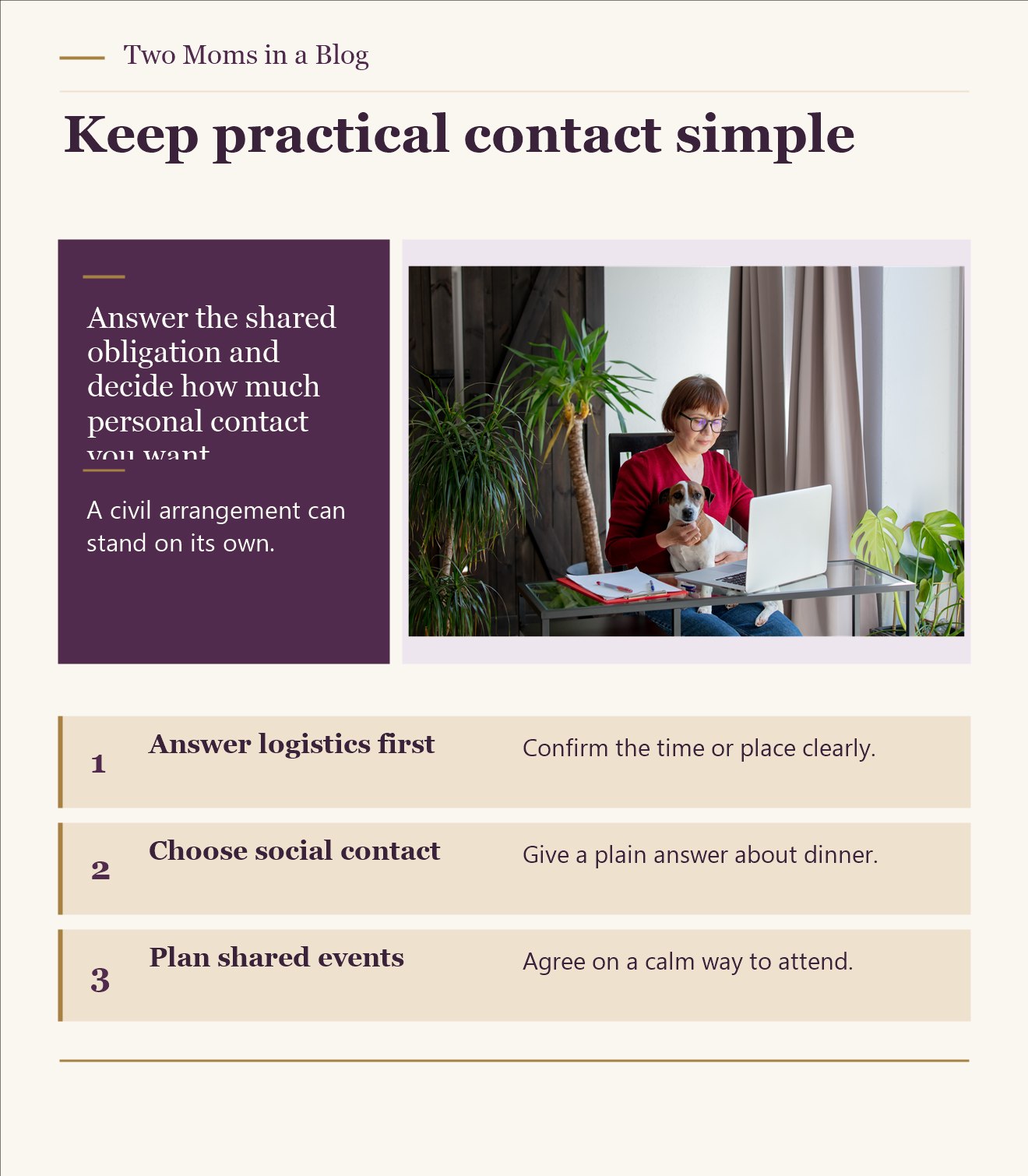
Read the infographic in text
Keep practical contact simple
Answer the shared obligation and decide how much personal contact you want.
- Answer logistics first Confirm the time or place clearly.
- Choose social contact Give a plain answer about dinner.
- Plan shared events Agree on a calm way to attend.
A civil arrangement can stand on its own.