

Summer may give you new places to meet people, and extra time can also make loneliness more noticeable. If you are hoping to meet a long-term partner, choose opportunities you will enjoy and give yourself time to learn who fits the life you want to lead.
On this page
Start with plans you can enjoy
Pick a setting where conversation feels natural, such as a daytime gathering or a class you can attend more than once. Make room for the friendships, activities and routines you want to keep whether dating is going well or taking a break.

Know which qualities matter to you
Write down the things you need in a relationship, such as kindness and room to make your own choices. Give yourself some flexibility about preferences that matter less. When a date feels quiet, ask whether you would like another conversation before deciding how much the first meeting tells you.
Learn through ordinary time together
Look at how both of you make plans, handle a delay and respond when someone says no. Talk about the future once you know enough about each other to name the choices that matter. Let that information shape commitments about money, home or family.
Give a good connection room to grow
If you both enjoy the connection, agree on a next step that leaves room for work, friends and time alone. If the pace feels uncomfortable, talk about it early. A strong connection can make room for both people’s preferences and an honest conversation about what they want.
Notice what happens when a plan changes
Suppose you suggest a long walk and your date mentions a knee problem. The exchange offers a useful clue. Can you talk openly about what would work and make a different plan together?
Try naming a preference that matters to you, such as having some weekends to yourself. Over several weeks, pay attention to how freely you can both express a preference and how you adapt to ordinary changes.
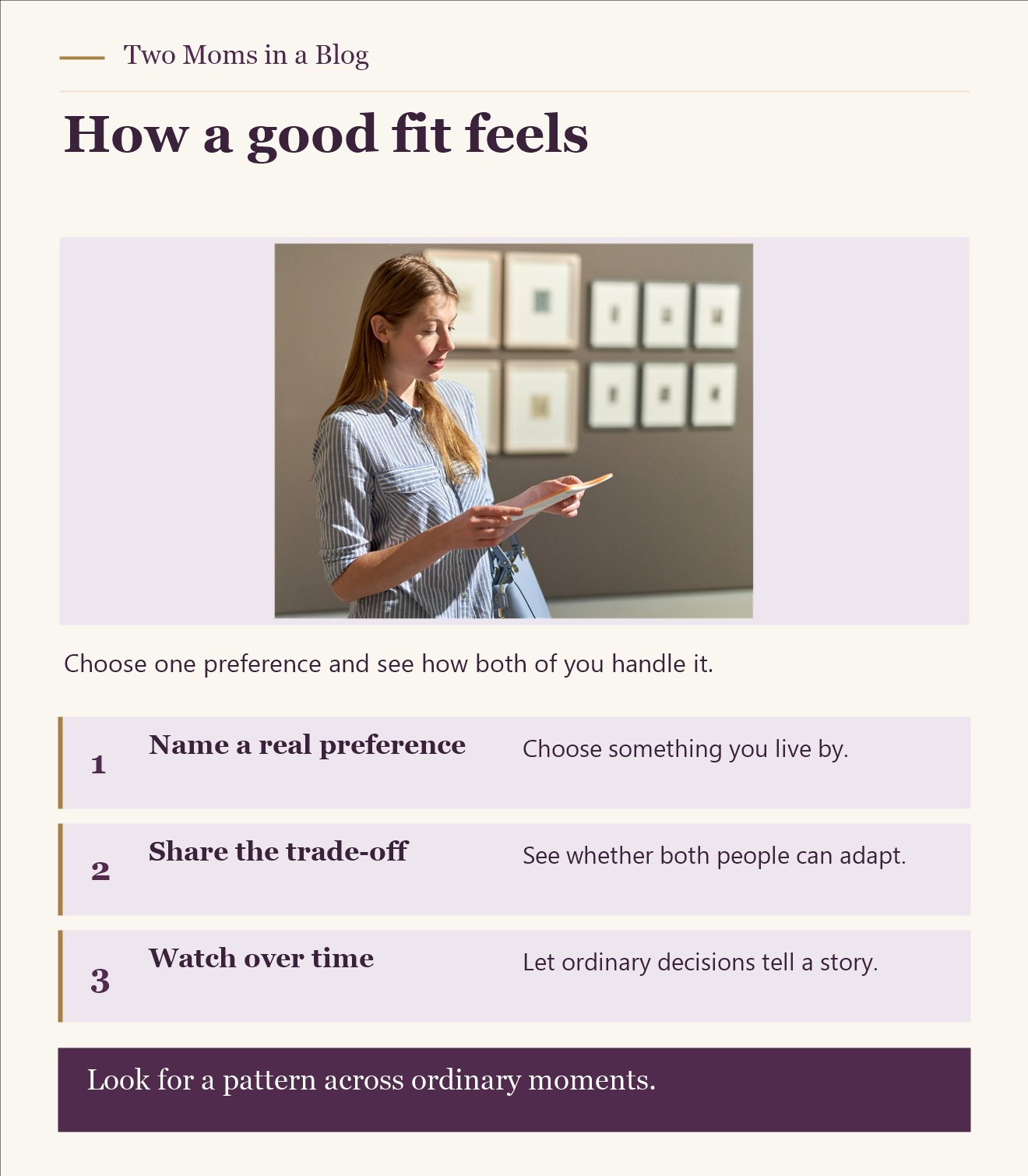
Read the infographic in text
How a good fit feels
Choose one preference and see how both of you handle it.
- Name a real preference Choose something you live by.
- Share the trade-off See whether both people can adapt.
- Watch over time Let ordinary decisions tell a story.
Look for a pattern across ordinary moments.