

When a partner says they will change, pay attention to what happens next. They can name the behavior, understand how it affects you and take steps they can describe. You get to decide how much time and energy you are able to give the situation.
On this page
Describe the behavior you need to discuss
Choose a specific example, such as an agreed bill that went unpaid or plans that were canceled without notice. Say what it affected and what you need next time. Their response can help you see whether they are willing to talk about the effect of their choices.

Look for follow-through over time
Someone who takes responsibility can make a realistic plan and carry out their part without repeated reminders. Notice whether actions continue after the immediate disagreement passes. If the same promise comes up after every incident, consider what the pattern has already shown you.
Decide what boundary you can keep
You can choose what you are willing to handle and what you will do if the pattern continues. If you want to keep dating, be clear about what needs to improve and when you will check in. If you keep wanting them to change basic parts of who they are, it may be time to reconsider the fit.
Get support when you feel unsafe
Threats, intimidation and controlling behavior call for support that puts your safety first. If you are worried about how your partner will react, a domestic violence advocate can help you think through your options. In the United States, the National Domestic Violence Hotline explains warning signs of abuse and offers help making a safety plan.
Read the infographic in text
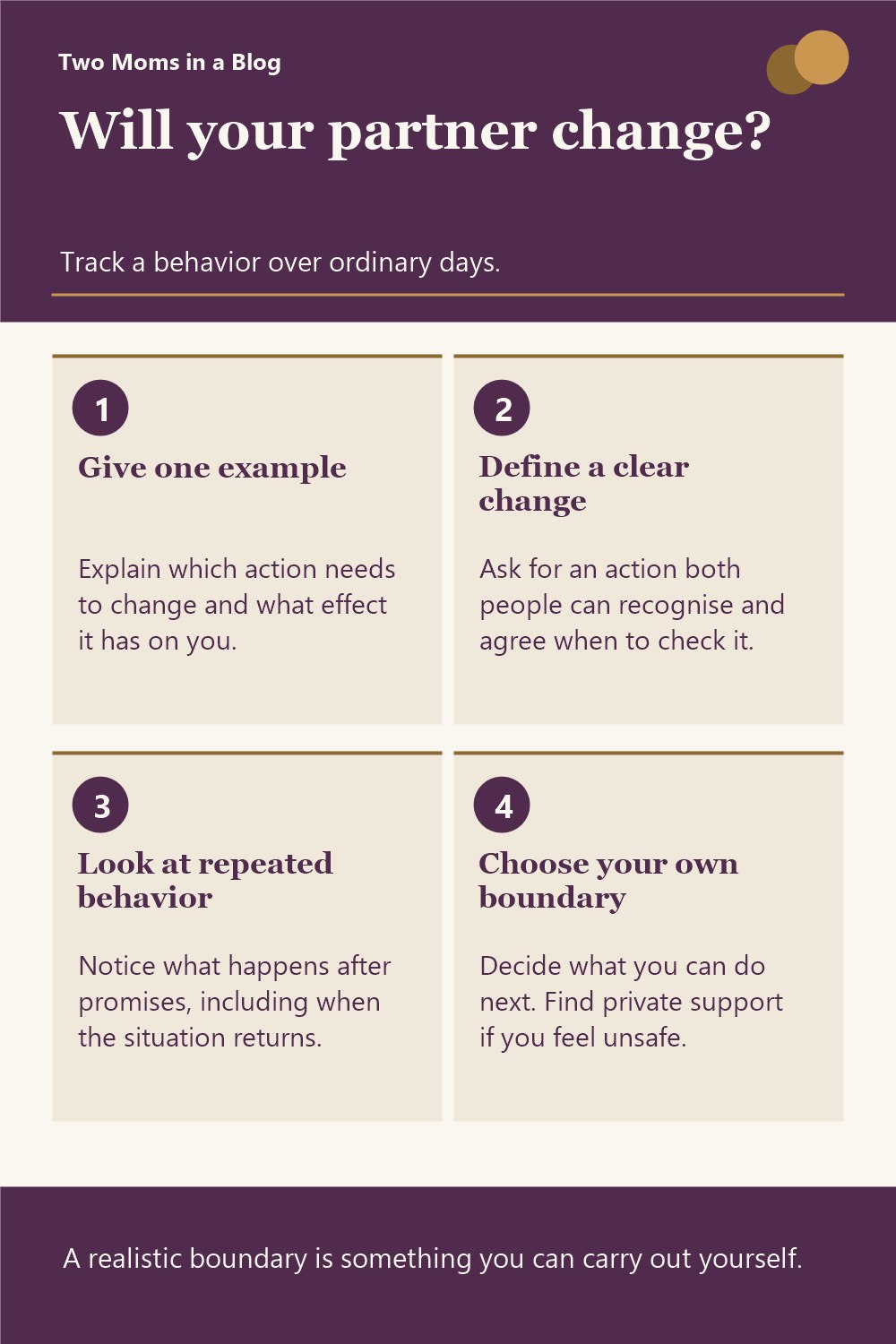
Will your partner change?
Track a behavior over ordinary days.
- Give one example Explain which action needs to change and what effect it has on you.
- Define a clear change Ask for an action both people can recognise and agree when to check it.
- Look at repeated behavior Notice what happens after promises, including when the situation returns.
- Choose your own boundary Decide what you can do next. Find private support if you feel unsafe.
A realistic boundary is something you can carry out yourself.